
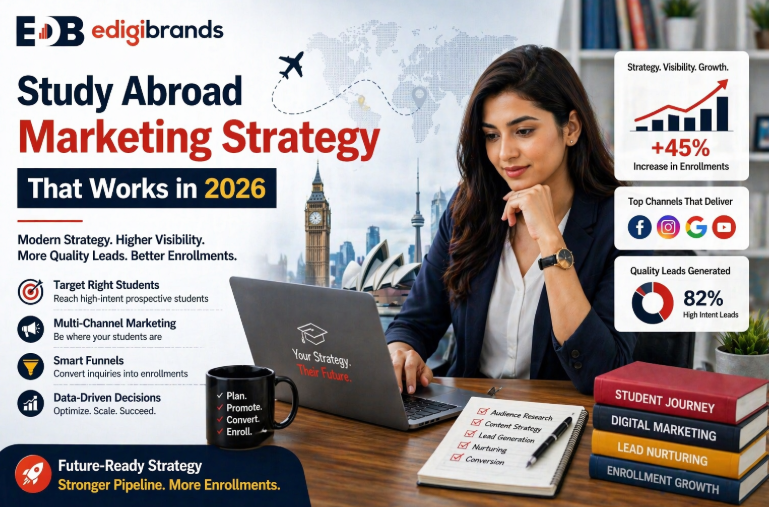
Are you a study abroad consultant in India feeling like you’re running on a treadmill? You’re generating leads, conducting counseling sessions, and attending education fairs, but the actual admissions growth feels stagnant. The competition is fiercer than ever, and the old tactics just aren’t cutting it anymore. If you’re ready to break the cycle of inconsistent results, you need a study abroad marketing strategy built for the future, not the past. This guide will walk you through a proven framework designed to attract high-quality students and drive sustainable admissions growth in 2026 and beyond.
Why Your Current Marketing Isn’t Delivering Results
The landscape of student recruitment has seismically shifted. The modern Indian student is a digital native, deeply skeptical of traditional advertising, and empowered with more information than any generation before them. Many consultancies struggle because their strategies are outdated. Reliance on costly education fairs, generic social media posts, and a ‘one-size-fits-all’ approach leads to low-quality leads and wasted budgets. In 2026, a successful study abroad marketing strategy must be hyper-personalized, data-driven, and value-focused. It’s no longer about who shouts the loudest, but who connects the most authentically.
The Foundation: Understanding the Modern Indian Student Persona
Before you spend a single rupee on ads, you must understand your audience. The aspiring study abroad student from India in 2026 has a unique profile:
- They are researchers: They spend weeks, even months, researching online. They consume blogs, watch YouTube testimonials, follow student influencers on Instagram, and read reviews on Google.
- They seek authenticity: They can spot a sales pitch from a mile away. They want genuine advice and transparent information, which is often the real reason students don’t choose your consultancy even if you’re good. They trust peer experiences over corporate brochures.
- They think long-term: It’s not just about getting a degree; it’s about the return on investment. They are concerned with post-study work visas, career opportunities, and immigration pathways.
- Their parents are key stakeholders: While the student is the primary researcher, parents are often the ultimate decision-makers and funders. Your marketing must also build trust and confidence with them, often on platforms like LinkedIn and WhatsApp.
Core Components of a Winning Study Abroad Marketing Strategy
A robust plan is built on several key pillars. Integrating these components will differentiate your consultancy from the competition.
1. Niche Specialization: You Can’t Be Everything to Everyone
The market is too crowded to be a generalist. Instead of offering services for all countries and all courses, specialize. Become the go-to expert for ‘Engineering in Germany for Indian students’ or ‘MBAs in Canada’. This focus allows you to create highly relevant content, tailor your messaging, and build a reputation as a true authority. Your niche becomes your competitive advantage.
2. Content is King: Educate, Don’t Just Sell
Your content is the engine of your lead generation. The goal is to answer every possible question a student might have during their journey. This builds trust and positions you as their primary resource. Create content in various formats:
- Blog Posts: Detailed guides on topics like ‘Cost of Living in Australia for Indian Students’ or ‘How to Write a Compelling SOP for UK Universities’.
- Video Content: Student testimonials, university campus tours (virtual), and Q&A sessions with counselors on YouTube and Instagram Reels.
- Downloadable Guides: Comprehensive eBooks or checklists, such as a ‘Pre-Departure Checklist’ or ‘Scholarship Application Guide’, in exchange for an email address.
- Webinars: Live sessions on specific topics like ‘Applying to US Universities for Fall 2026 Intake’.
3. Building a Strong Brand Presence
Your brand is more than your logo. It’s the feeling and reputation you cultivate. A strong brand builds trust, which is crucial for a high-stakes decision like studying abroad. Ensure your website is professional, easy to navigate, and showcases success stories. Maintain a consistent, helpful, and professional tone across all your digital channels. Your brand story should resonate with the aspirations of your target students.
Building Your High-Converting Funnel Strategy
A well-defined funnel guides a prospective student from initial awareness to final enrollment. This is the core of effective student acquisition.
Top of Funnel (TOFU): Awareness
At this stage, students are just beginning their research. Your goal is to attract them with valuable, free content. This is where SEO-optimized blog posts, engaging social media content, and helpful YouTube videos shine. You are not selling; you are helping.
Middle of Funnel (MOFU): Consideration
Once a student is aware of your brand, you need to nurture that relationship. Here, you can offer more in-depth resources in exchange for their contact information. This includes webinars, detailed guides, and email newsletters. This is where you qualify leads and segment them based on their interests (e.g., country, course).
Bottom of Funnel (BOFU): Conversion
This is the decision-making stage. The student is ready to choose a consultant. Your goal is to make it easy for them to choose you. Offer personalized counseling sessions, application reviews, and direct support. Strong calls-to-action are critical here.
Ready to build a future-proof funnel strategy that drives results? Book a free strategy session with Edigibrands today! We specialize in helping consultants achieve sustainable admissions growth.
Leveraging Digital Marketing for Consultants: Key Channels
An effective digital marketing for consultants plan uses a multi-channel approach. Here’s where to focus your efforts for maximum impact.
1. SEO: The Long-Term Growth Engine
Search Engine Optimization is the art of ranking high on Google for relevant search terms. When a student in Mumbai searches for ‘best study in New Zealand consultant’, you want to be the first result they see. This provides a steady stream of high-intent, organic leads. SEO is not a quick fix, but it delivers the best long-term ROI. For more insights on consistent lead flow, explore why consistency matters more than budget in study abroad lead generation.
2. Paid Advertising (Smarter, Not Harder)
Google and Meta (Facebook/Instagram) Ads can deliver immediate results if done correctly. Instead of running generic ‘Study Abroad’ ads, use hyper-targeting. For example, target users in specific cities who have shown interest in ‘master’s in data science’ and universities in the USA. The key is to run highly specific campaigns that lead to relevant landing pages. Many campaigns burn money; understand why most study abroad ads fail and what actually drives enrollments to avoid common pitfalls.
3. Social Media Marketing (Beyond Just Posting)
Use platforms where your audience lives. Instagram and YouTube are perfect for student-facing content like day-in-the-life videos, testimonials, and Q&As. LinkedIn is a powerful tool for connecting with parents and showcasing your professional expertise and partnerships. The goal is to build a community, not just an audience.
Measuring Success: KPIs for Admissions Growth
To know if your study abroad marketing strategy is working, you must track the right metrics. Move beyond vanity metrics like ‘likes’ and ‘followers’. Focus on KPIs that directly impact admissions growth:
- Lead Quality Score: How many leads meet your ideal student profile?
- Cost Per Qualified Lead (CPQL): How much does it cost to acquire a lead that is actually a good fit?
- Application Rate: What percentage of qualified leads end up submitting an application?
- Enrollment Rate: What percentage of applications result in a confirmed enrollment?
- Funnel Conversion Rates: Track the percentage of leads that move from one stage of your funnel to the next.
By focusing on these metrics, you can make data-driven decisions to optimize your marketing spend and efforts for maximum impact on your bottom line.
Don’t let your consultancy get left behind. Contact us to see how the team at Edigibrands can fuel your admissions growth for 2026.
Frequently Asked Questions (FAQs)
How much should I budget for my study abroad marketing?
There’s no magic number, but consistency is more important than a huge budget. It’s better to spend a smaller amount consistently every month on a well-planned strategy than to spend a large amount sporadically. Focus on ROI-driven channels like SEO and targeted paid ads. A good starting point is 5-10% of your target revenue.
Is it better to focus on organic or paid marketing?
The best approach is a combination of both. Organic marketing (SEO, content) builds long-term trust, authority, and provides a sustainable source of leads. Paid marketing (Google/Meta Ads) delivers immediate traffic and is excellent for testing new markets or promoting time-sensitive offers like application deadlines. They work together to create a powerful funnel strategy.
How can I stand out from bigger, more established consultancies?
Specialize! Don’t try to compete on all fronts. Carve out a niche (e.g., a specific country, course, or student profile) and become the absolute best in that area. Create superior, more detailed content than your competitors and offer a more personalized service. Your agility and focus are your biggest advantages.
What’s the most important part of a digital marketing funnel for student acquisition?
The middle of the funnel (MOFU) is often the most critical and overlooked part. This is where you build trust and nurture relationships through email sequences, webinars, and personalized follow-ups. A strong MOFU ensures that the leads you send to your counseling team are educated, qualified, and ready to take the next step, dramatically increasing conversion rates.
How do I generate high-quality study abroad leads consistently?
Consistency comes from creating a systematic approach. Develop a content calendar, optimize your website for specific keywords, and consistently engage with your audience. The key is to provide value at every single touchpoint. For a deeper dive, read our guide on how to generate high-quality study abroad leads consistently. This systemic approach forms the backbone of a successful long-term plan.